Ecosystem
Around Rare Data: Link Audio Beyond the Desktop
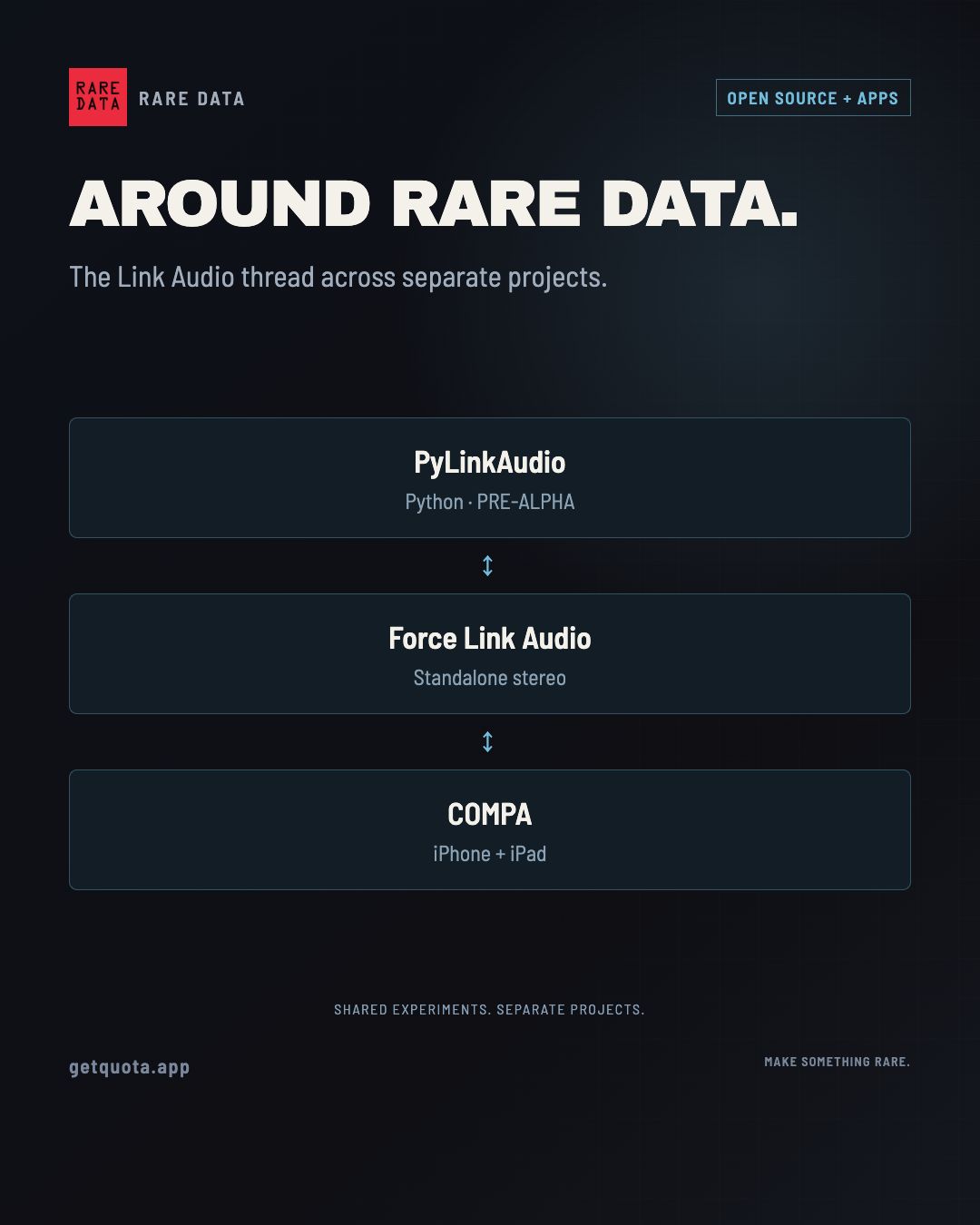
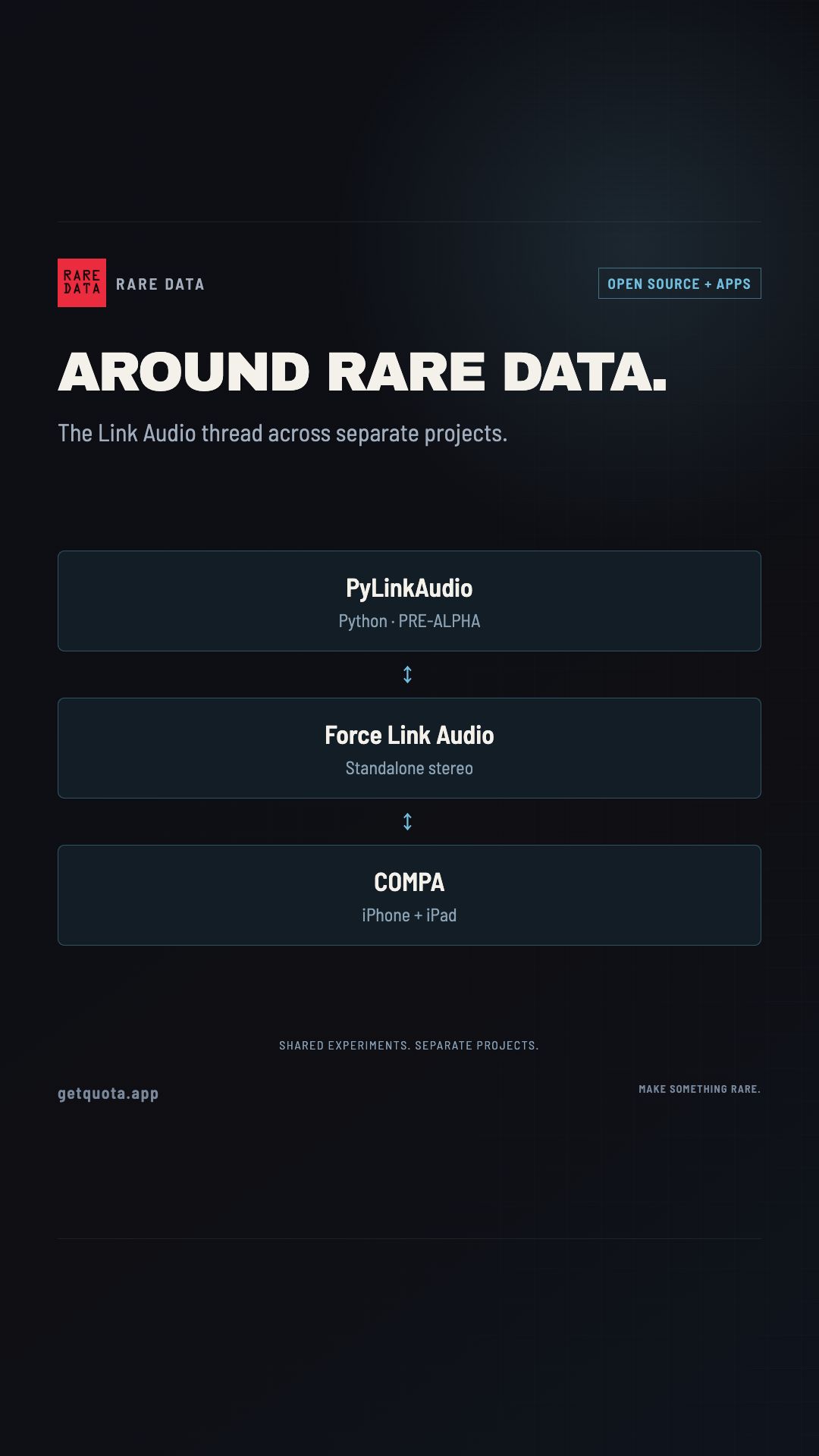
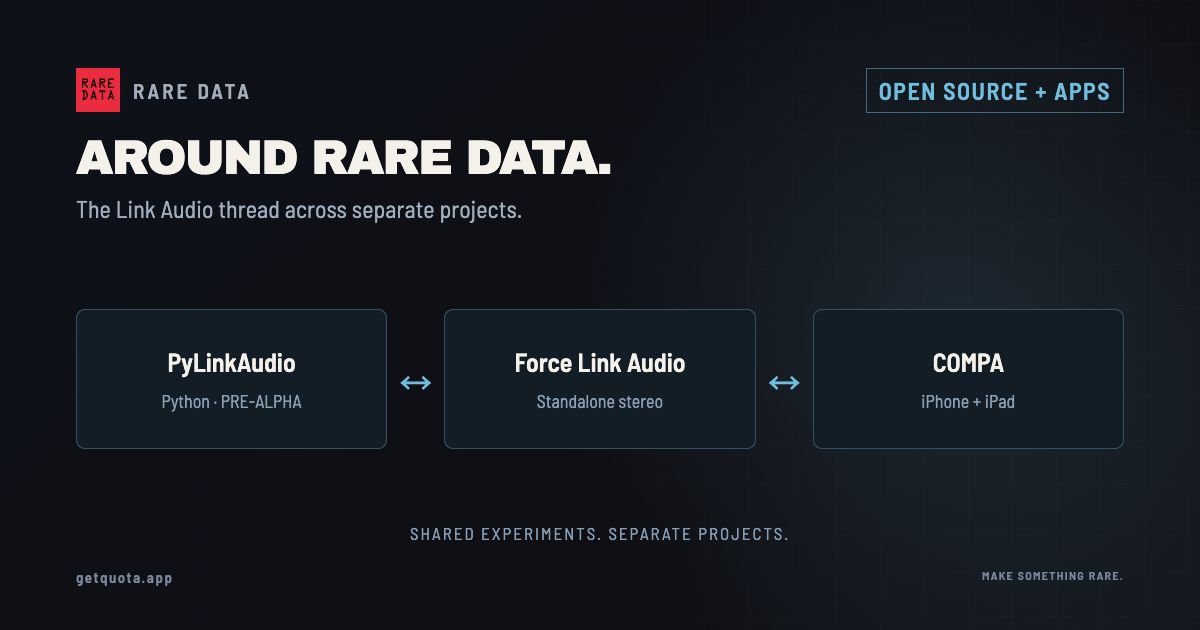
Three connected chapters: Python Link Audio bindings, a standalone Akai Force audio bridge, and the journey from Raspberry Pi Compa to today’s iPhone/iPad app.
The Quota release notes cover the desktop tools. Some of the work around them belongs to a wider question: how can the instruments and computers already in a session work together more easily?
Three new stories on Rare Data trace that work.
Force Link Audio
A free, open-source MockbaMod add-on publishes the Akai Force’s main stereo mix as a Link Audio channel while the instrument stays standalone. The demonstration includes a correction to its original latency estimate: about 40 ms in that setup with a 7 ms receiver buffer, not a general benchmark. It is a community modification with documented setup limits.
Read the Force Link Audio build story.
PyLinkAudio
PyLinkAudio provides Python bindings for Link Audio send and receive. Version 0.1.0a1 is pre-alpha infrastructure for builders, targeting the documented macOS/Linux environments. It is a separate project from the Force add-on, part of the same line of experiments.
Read about the Python bindings.
From Pi to iPhone and iPad
The original Raspberry Pi Compa and today’s App Store COMPA are separate products with a shared history. The workshop retrospective explains what the Pi project taught me and why the everyday companion moved to a phone and tablet.